
Logistics — April 10, 2025 — 5 min read
Why Logistics Strategy Matters in International Trade
In international trade, logistics is not a back-office function — it is a strategic lever. The difference between a business that scales and one that stagnates often comes down to how well it manages movement, timing, and visibility across its supply chain.
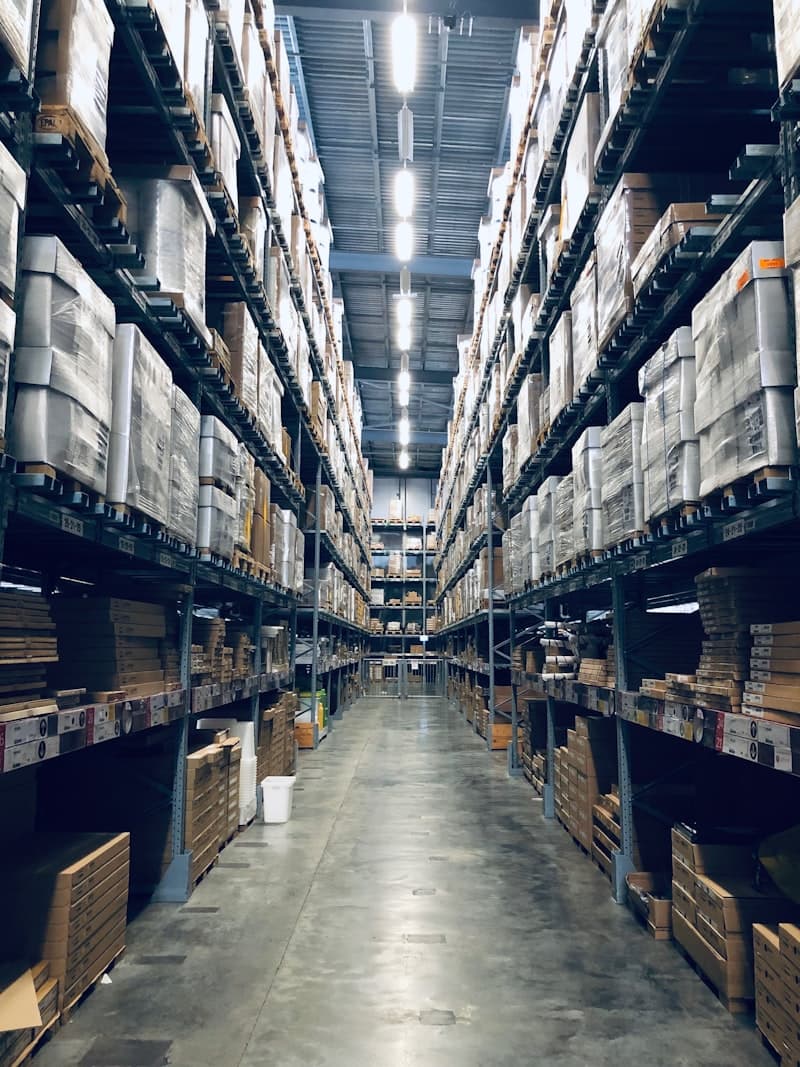
In international trade, logistics is not a back-office function — it is a strategic lever. The difference between a business that scales and one that stagnates often comes down to how well it manages movement, timing, and visibility across its supply chain. Yet for many companies entering or expanding in global markets, logistics remains an afterthought: something to be figured out after the commercial deal is done. That approach is costly, and increasingly, it is a competitive liability.
The Strategic Weight of Logistics
Consider what logistics actually encompasses in an international trade context: freight booking and coordination, customs clearance and documentation, port handling and inland transport, warehousing and last-mile delivery, insurance and risk management, and increasingly, real-time visibility and data reporting. Each of these elements has cost, time, and reliability implications. And each of them, when poorly managed, creates friction that compounds across the entire commercial relationship.
A manufacturer in Bangladesh who consistently ships on time, with accurate documentation and predictable lead times, commands more trust — and often better pricing — from international buyers than a competitor with similar product quality but erratic logistics performance. In markets where buyers can choose from multiple supplier geographies, logistics reliability is a genuine differentiator. It is not table stakes — it is strategy.
Where Most Businesses Go Wrong
The most common logistics mistake we observe among companies entering international trade is the assumption that lower freight costs equal better logistics strategy. Cost matters, of course — but it is one variable in a multi-dimensional equation. A cheaper freight option that adds five days to your transit time, requires an extra transshipment, or comes with lower cargo security standards may cost far more in aggregate than the rate differential suggests.
The second common mistake is treating logistics as a vendor relationship rather than a partnership. Companies that shop for the cheapest freight forwarder on every shipment, with no continuity of relationship, tend to get transactional service in return: minimal proactive communication, slow problem resolution, and no institutional knowledge about their business. Companies that invest in logistics partnerships — sharing volume commitments, building shared processes, and maintaining consistent communication — consistently outperform on reliability and exception management.
Third, many businesses underinvest in documentation discipline. In international trade, paperwork errors — incorrect HS codes, misdeclared values, missing certificates of origin — cause delays that can cascade across an entire shipment cycle. A consignment held in customs for a week does not just cost the storage fee. It delays payment, strains the buyer relationship, and often forces the seller to absorb costs they had not budgeted for.
The Visibility Imperative
One of the most significant shifts in international logistics over the past decade has been the rise of shipment visibility as a commercial expectation. Buyers increasingly expect to know where their cargo is at any given moment — not just at origin and destination, but throughout the journey. This expectation has migrated from large multinational buyers to mid-size and even smaller importers, driven by the consumer-grade tracking experiences people encounter in their personal lives.
For exporters and logistics operators, this creates both a challenge and an opportunity. The challenge is the investment required to provide real-time data — systems integrations, carrier connectivity, and reporting infrastructure are not free. The opportunity is differentiation: a seller who can provide consistent, accurate shipment visibility stands out in markets where that remains uncommon.
At ParcelX, we treat visibility not as a technology problem but as a process problem. The technology is a vehicle. The real work is ensuring that the underlying logistics operations — booking, documentation, handoffs between parties — are clean enough that visibility data is actually reliable. Showing a customer inaccurate tracking information is often worse than showing them nothing at all.
Logistics Strategy in Emerging Market Corridors
The strategic importance of logistics is amplified on emerging market corridors — like Bangladesh to the United States, or South Asia to the Middle East — where infrastructure variability, regulatory complexity, and carrier coverage limitations make execution harder. On these corridors, a logistics strategy that works in theory may not work in practice without deep local knowledge and established relationships at the port, customs, and carrier level.
This is why we consistently advise clients entering new trade corridors to invest time in understanding the operational realities before committing to commercial volumes. What are the typical customs clearance timelines? Which carriers have reliable service on this lane? What documentation is required at each end, and who is responsible for producing it? These are not details — they are the foundation of a logistics strategy that can actually be executed.
Building Logistics Resilience
The global disruptions of recent years — port congestion, blank sailings, rate volatility, and geopolitical routing constraints — have elevated resilience as a logistics priority. Businesses that operated with a single carrier, a single routing, and no contingency planning found themselves exposed in ways they had not anticipated. Diversification of logistics options is now a core risk management practice, not a luxury.
Resilience does not mean redundancy for its own sake — it means having the relationships, the knowledge, and the flexibility to adapt when primary routes or carriers fail. It means knowing your alternative options before you need them. And it means building enough slack into your commercial commitments that a logistics disruption does not immediately become a contractual breach.
The ParcelX Perspective
Our approach at ParcelX Corporation is to treat logistics strategy as inseparable from commercial strategy. When we work with clients on trade corridor development, we build the logistics framework in parallel with the commercial framework — because the two are interdependent. A commercial promise that the logistics cannot support is not a strategy. It is a liability.
For businesses serious about building durable international trade operations, the investment in logistics strategy is not optional. It is foundational. And the companies that make that investment early — before the problems arise rather than after — are the ones that build the kind of reliability that compounds into genuine competitive advantage over time.